El Niño, meaning Little Boy in Spanish, was first noticed by a South American fisherman in the 1600s. He noticed unnaturally warm waters in December in the Pacific Ocean.

Now, El Niño occurs every 2-7 years, lasting about a year. However, El Niño is not very predictable.
El Niño is the fluctuation of the ocean-atmosphere system in the tropical Pacific, and it has important consequences for weather around the globe.
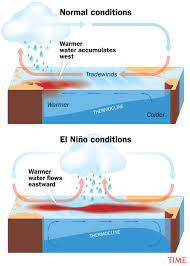
There is increased rainfall and destructive flooding in the Americas, droughts in the Western Pacific, and bushfires in Australia.
So how do climate change and El Niño relate?
El Niño increases global temperatures, and according to a 2014 study, Super El Niño, a worsened version of El Niño) could double in occurrence due to climate change.
Studies also show that we are about to be in another El Niño at the end of 2023. This would mean that the current impacts climate change is having would be greatly worsened. We need to prepare fast.
To learn more, check out this WMO update. https://public.wmo.int/en/media/press-release/wmo-update-prepare-el-ni%C3%B1o

 The Current Environmental Crisis